Automation testing has revolutionized the software development industry by making the testing process more efficient, consistent, and reliable. One of the key methodologies within automation testing is Data Driven Testing (DDT). This technique allows testers to execute the same test script multiple times with different sets of data inputs, making it incredibly versatile and powerful for ensuring software quality.
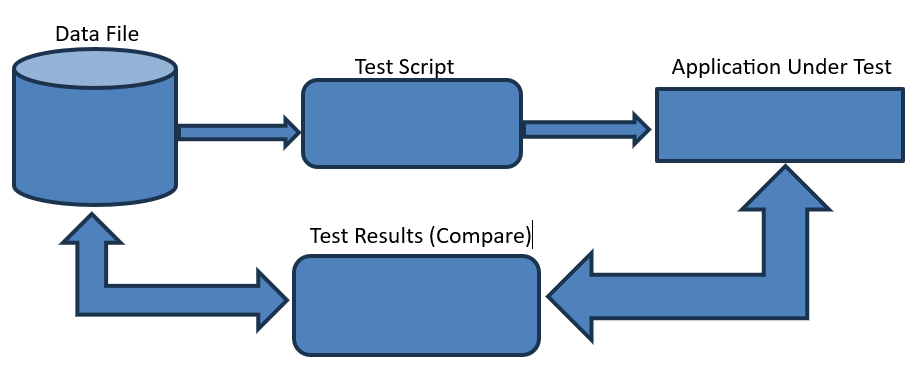
Data-driven testing is a technique in software testing where the test data is sourced from external files like spreadsheets, databases, or CSV files, rather than being embedded directly in the test case. This approach allows for the same test logic to be applied to various datasets, enabling repeated execution with different data inputs.
In a data-driven testing approach, we create test scripts or workflows that are executed along with their associated datasets within an automated testing framework or tool. This method involves retrieving input values from data files and assigning them to variables within the test scripts. This allows testers to incorporate both positive and negative scenarios within a single test case. The input data in a data-driven framework can be housed in various formats, such as .xls, .xml, .csv, or within databases.
Importance of Data driven testing in automation
One of the main advantages of Data Driven Testing is its ability to efficiently manage large volumes of test data. It allows for comprehensive testing across a wide range of scenarios, ensuring that the application behaves as expected under diverse conditions. This is particularly beneficial in complex applications where multiple data inputs can lead to different outcomes.
Moreover, Data Driven Testing facilitates better collaboration within teams. Testers can focus on creating robust test scripts, while business analysts or other stakeholders can provide input data, aligning testing efforts with business requirements.
Additionally, there are several key benefits that make it even more exceptional.
Unleash the Power of Reusability: Imagine being able to use the same test scripts across various data sets! That’s the magic of DDT. It boosts test coverage without the hassle of starting from scratch every time.
Save Precious Time: With automated tools that can whip up test data in no time, you’ll breeze through massive data volumes. Say goodbye to tedious manual entries and hello to efficiency!
Embrace Flexibility: With DDT, your application maintenance becomes a walk in the park. Say less about constant tweaks and more about a seamless, adaptive process.
Cut the Clutter: Who needs redundant test scripts clogging up the works? DDT helps you streamline by slashing unnecessary duplications, allowing you to focus on what truly matters.
This testing technique has certain limitations.
Data-driven testing in automation offers several advantages, but it also comes with certain limitations, including:
Dependency on Automation Team Expertise – The effectiveness of tests depends on the skill level of the automation team.
Proficiency in Scripting Languages – A strong understanding of scripting languages is required to implement and manage data-driven tests effectively.
Extended Execution Time – Handling large datasets can lead to longer test execution durations.
Complex Maintenance – Maintaining data-driven tests can be challenging due to intricate code structures and complex logic.
Limited Coverage for UI-based Tests – Data-driven testing is more suited for backend and API testing but may not always be ideal for UI-heavy scenarios.
Conclusion
In conclusion, Data Driven Testing is an essential component of modern automation testing strategies. By decoupling test data from test scripts, it enhances flexibility, reduces maintenance efforts, and improves test coverage. As software systems become more complex, the ability to efficiently manage and execute tests with diverse data sets will continue to be a crucial factor in delivering high-quality software solutions.